

Where Family Works Together

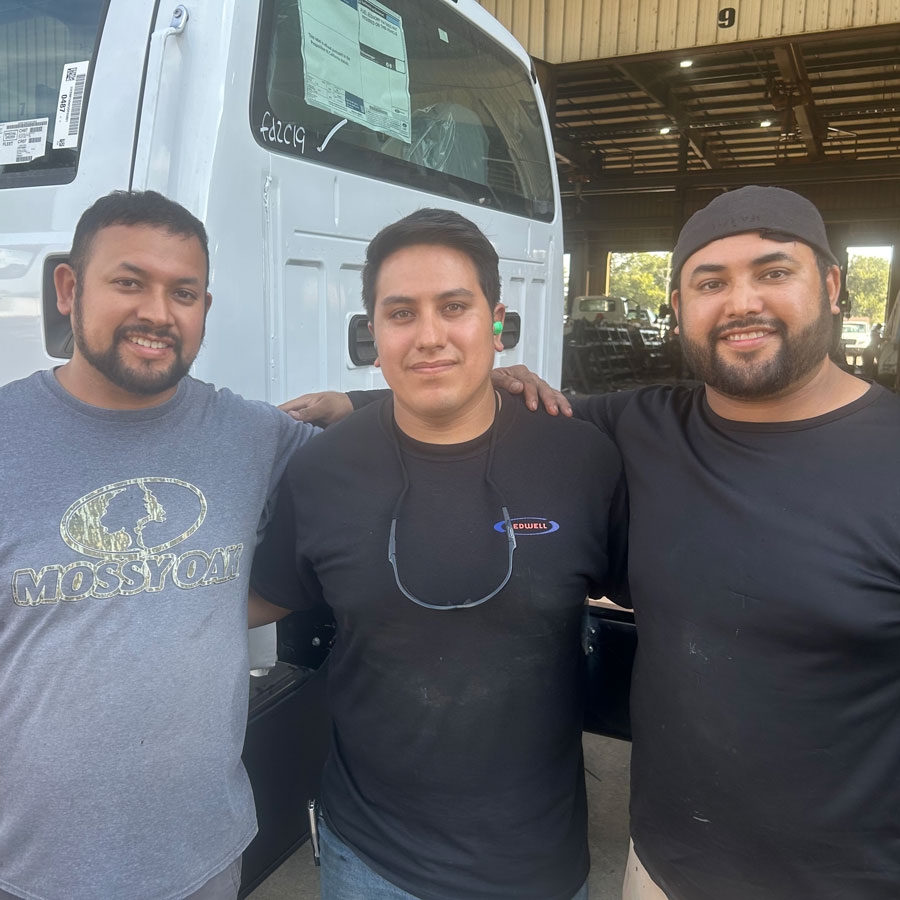
At Ledwell, the word “family” means something special. It is one of our core values, and for many employees, it is also a reality. Walk through our shops and offices, and you will find brothers working alongside brothers, parents and children sharing the same pride in their work, and family traditions being passed from one generation to the next.

One example of that legacy is the Wooten family. David Wooten, now retired, helped plant the roots of the family’s Ledwell story years ago. Today, that legacy continues through four family members who still work here. Seeing multiple generations of one family contribute to Ledwell’s success reminds us that the values of hard work, craftsmanship, and commitment don’t stay at home; they carry over into the workplace as well.

The same family spirit runs through the company. For Dulce Bustamante, coming to work often feels like a family gathering. She shares the Ledwell experience with brothers, in-laws, cousins, and extended family members. Those relationships create trust and camaraderie that reflect what so many employees say makes Ledwell different. You are surrounded by people who have your back.

Stories like these are not unusual here. In fact, dozens of family groups work across Ledwell. Some families have been here for generations, while others are just beginning their Ledwell journey. Together, they help create the culture that has defined our company for decades.

We are proud of the equipment we build, but we are just as proud of the people who build it. The Ledwell Family Tree continues to grow, branch by branch, generation by generation, proving that at Ledwell, family is more than a value.

It is part of who we are.

The roots run deep, and that’s what makes the Ledwell family strong.

SIBLINGS

Seth & Sol Bridges
Mark & Kyle Phelps
Martin & Juan Manuel Lopez
Matthew Gerber & Michael Tucker
Jorge, Jacobo & Jose Sanchez
Anthony & Jooana Guerrero
Abraham & Francisco Olvera
Tim & Jerry Snider
Ulisedt, Tomas, Julio & Ignacio Garcia Sanchez
Alfredo Ramirez, Cristobal Vidal & Victor Vidal Ramirez

COUSINS

Buck Jackson & Randall Guffey
Cory Clements & Lane McMillan
Chris Wade & Brandon O’Neal

UNCLES & NEPHEWS

Trevor Kroll & Timothy Hallett Jr.
Kyle, Haden Sanders & John Ceynowa

FATHERS & DAUGHTERS

Steve & Lesley Ledwell
Kenney Cecil & Lisa McEuen

FATHERS & SONS

Jamie Morgan & Kobe Ewing
Kenny Polite & Devonta Britt
Abraham & Marco Borboa
Frankie & Cole Rankin
Samuel & Samuel Cutshall
Gerardo & Brian Olvera

FATHER & SON IN LAWS

Kyle Hillis & Charlie Chance
Bill Robinson & Trent Thomas

MULTI-GENERATION FAMILIES

Phillip Anderson – Father
Cody Anderson – Son
James Beard – Nephew

Tyler Howe – Daughter
Jill Launius – Mother
Mark Launius – Father

Claudio Sierra – Father/Grandfather
Gaby Sierra – Son
Roberto Sierra – Son
Ariel Olvera – Grandson
Jonathan Sierra – Grandson

Roman Ramos – Brother/Father
Roman Ramos Jr – Son
Roberto Ramos – Brother/Father
Francisco Ramos – Son

Shannon Bradford – Brother in law/Uncle
Fred Gomez – Brother in law/Father
Paige Gomez – Daughter/Niece
Jewell Gomez – Daughter/Niece

and many more!
Carrying the Mission Home

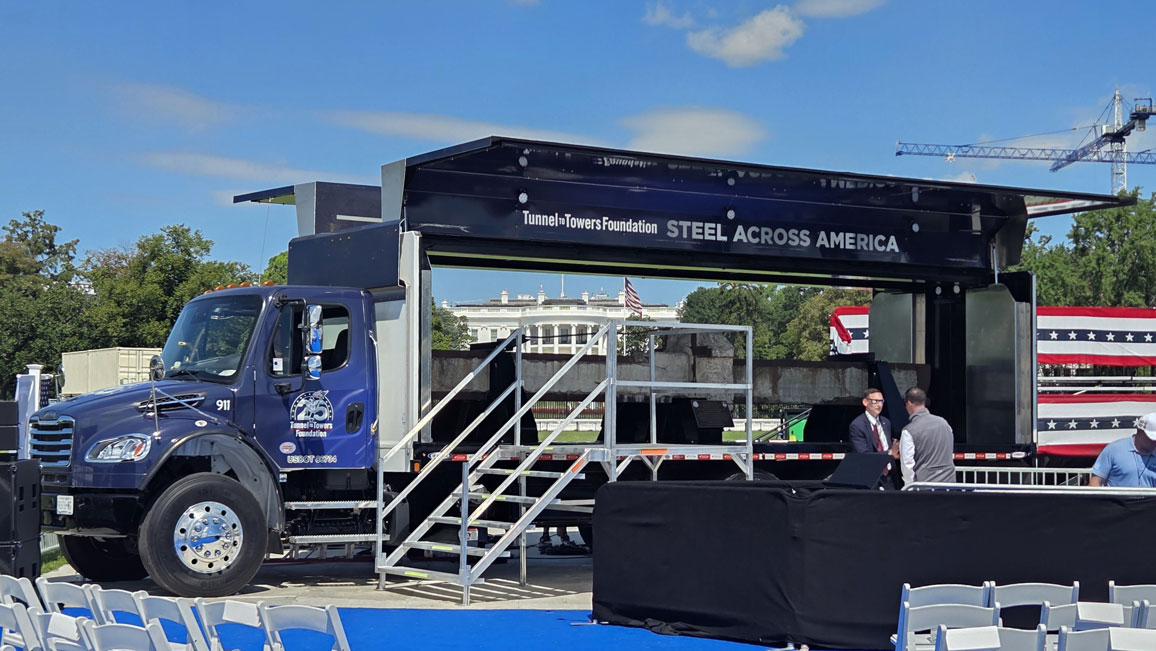
The journey may have reached its destination, but the impact keeps growing. After traveling across the country as part of the Tunnel to Towers Foundation’s Steel Across America tour, the custom Gull Wing Truck completed its mission of delivering a powerful symbol of remembrance to communities nationwide.

Along the way, the tour united families, veterans, first responders, and supporters honoring the lives lost on September 11 and the courage of those who answered the call. One of the tour’s most significant moments included a stop at the White House, where the mission’s message of service, sacrifice, and resilience reached a national stage.

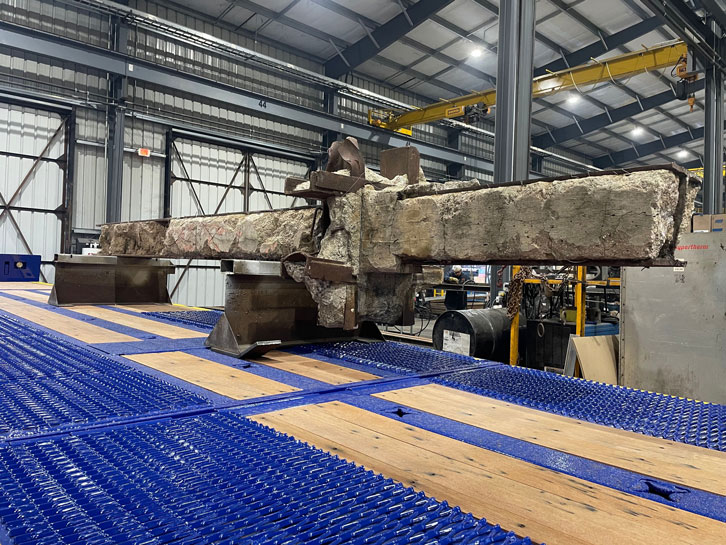
As the tour progressed, a second specially equipped truck joined the effort. A custom rollback was built to transport a smaller steel beam recovered from the World Trade Center, allowing its story to reach even more people. During one moving tribute, Frank Siller and Steve Siller Jr. walked behind the rollback through the Brooklyn Battery Tunnel, retracing the path taken by Steve Siller Sr. on September 11, 2001, as he ran toward the Twin Towers to help others.

Moments like these remind us that remembrance is not confined to a single day. It lives on through the stories we share, the people we honor, and the commitment to preserve their legacy for future generations. It has been a privilege to help support a mission that continues to inspire unity, gratitude, and service across America.

To learn more about the Tunnel to Towers Foundation and its ongoing mission, visit t2t.org.

How Section 179 and Bonus Depreciation Can Help Maximize Equipment Tax Deductions

Updated for 2026

Investing in new equipment is a big decision. Whether you’re expanding your fleet, replacing aging equipment, or preparing for a busy year ahead, current tax incentives may help reduce the cost of that investment.

For 2026, Section 179 and bonus depreciation may allow businesses to deduct all or a substantial portion of qualifying equipment costs in the year the equipment is placed in service. For many companies, that can mean improved cash flow while putting the equipment they need to work right away.

Here’s what business owners should know.

What is Section 179?

Section 179 allows businesses to deduct the cost of qualifying equipment and certain business property in the year it is placed in service rather than depreciating it over multiple years.

For 2026:

  • The maximum Section 179 deduction is $2,560,000.
  • The deduction begins to phase out when total qualifying equipment purchases exceed $4,090,000.
  • Equipment must be used more than 50% for business purposes to qualify.

Section 179 can apply to both new and used equipment, making it a valuable tool for businesses investing in trucks, trailers, and other heavy equipment.

What is Bonus Depreciation?

Bonus depreciation offers another opportunity to accelerate equipment deductions.

For eligible property placed in service during 2026, businesses may be able to deduct 100% of qualifying equipment costs through bonus depreciation.

Unlike Section 179:

  • There is no overall spending cap.
  • There is no annual deduction limit.
  • Bonus depreciation can create or increase a net operating loss in certain situations.
  • It generally applies to an entire class of qualifying property rather than specific assets selected by the taxpayer.

Many businesses use bonus depreciation alongside Section 179 to maximize first-year deductions.

How Section 179 and Bonus Depreciation Work Together

These tax incentives are often used together.

In general, businesses apply Section 179 deductions first and then apply bonus depreciation to any remaining eligible equipment costs.

This approach can help maximize first-year deductions while giving businesses flexibility in managing taxable income.

Example:

Let’s say a customer buys $2.7 million worth of Ledwell equipment.

The first $2.5 million is deducted under Section 179.

The remaining $200,000 is eligible for 100 percent bonus depreciation.

The result equals $2.7 million entirely written off in the first year.

This is real money saved, and a real reason to act before the end of the year.

Used Equipment Rules

Good news for customers considering pre-owned equipment: both Section 179 and bonus depreciation may apply to qualifying used equipment purchases.

To qualify, equipment generally must:

  • Be purchased rather than gifted or inherited.
  • Be new to the buyer, even if previously owned by someone else.
  • Be used primarily for business purposes.
  • Be placed into service during the tax year.
  • Be acquired in an eligible transaction and not purchased from a related party when bonus depreciation rules prohibit it.

Because individual circumstances vary, customers should consult their tax advisor to determine eligibility.

Why Many Businesses Act Before Year End

To receive potential tax benefits, qualifying equipment generally must be purchased and placed in service during the applicable tax year.

For businesses planning fleet upgrades, equipment expansion, or replacement purchases, waiting until the last minute can create delivery and scheduling challenges.

Planning ahead can help ensure equipment is ready to work when you need it and positioned to qualify for available tax incentives. Whether it’s Crash Trucks, Dump Trucks, or HydraTail Trailers, Ledwell is here to help you make the most of your purchase.

This article is provided for informational purposes only and should not be considered tax, legal, accounting, or financial advice. Tax laws, depreciation rules, deduction limits, and eligibility requirements may change and can vary based on individual circumstances. Customers should consult their CPA, tax advisor, or attorney regarding their specific situation before making purchasing or tax decisions. Eligibility for Section 179 deductions, bonus depreciation, and other tax incentives is determined by applicable law and individual taxpayer circumstances.

Fire Tender Trucks Supporting Texas Volunteer Departments

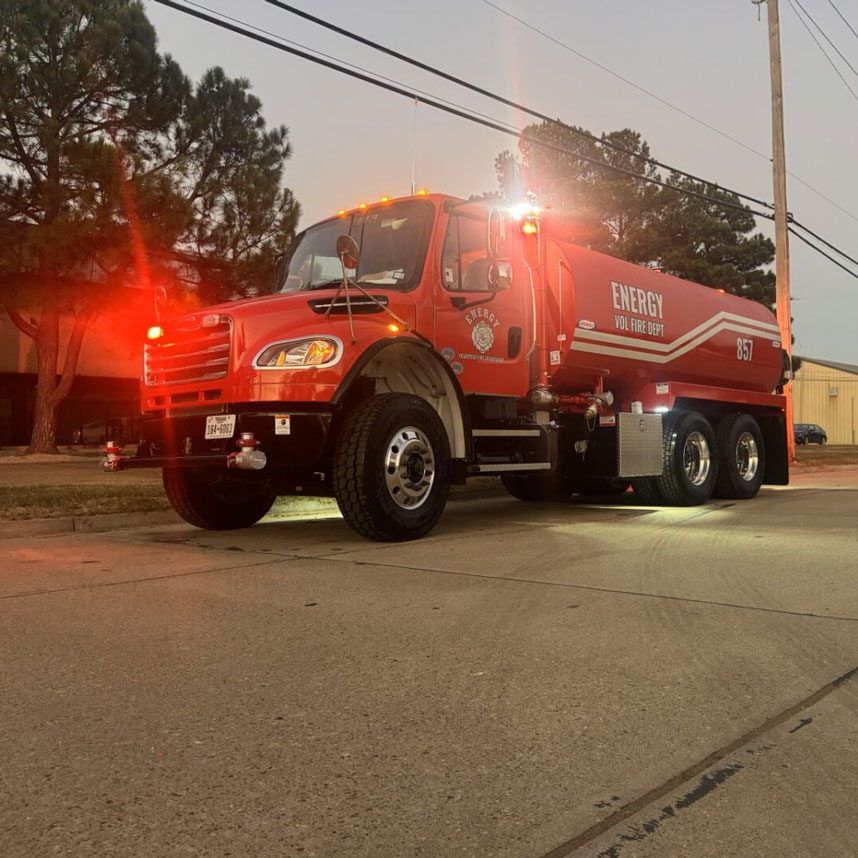
Volunteer fire departments across Texas serve on the front lines with limited resources, aging equipment, and wide coverage areas. When Texas releases grant funding, these departments face immediate pressure to secure reliable equipment and place it into service quickly. Delays are not an option when communities depend on them every day.

Since November 2025, 50 fire tenders have been delivered to Texas volunteer fire departments, helping crews respond faster. Many of these departments operate with small teams, long response distances, and limited maintenance capacity. They need equipment that is dependable, straightforward to operate, and ready to work from day one so they can focus on protecting lives, property, and the communities they serve.

heavy duty fire tender truck built for long distance emergency response

Behind every delivery is a department balancing grant timelines, training schedules, and real world emergencies. Volunteer firefighters often serve their own neighbors, families, and rural communities, relying on equipment that can perform reliably under pressure. Supporting those departments means understanding the urgency they face and helping ensure critical equipment is in service when it is needed most.

Manufacturing tough, innovative equipment that moves you forward is more than a mission. It is a commitment to the volunteer fire departments that protect Texas every day.

Texas fire tender truck supporting volunteer fire department response

Carrying History Forward: A Custom Truck Built for the Steel Across America Tour

Custom Gull Wing truck transporting 9/11 steel beam

Ledwell is honored to support the Tunnel to Towers Foundation as part of the Steel Across America tour, a nationwide mission transporting a steel beam from the World Trade Center to communities across the country. The tour marks 25 years of memory – bringing Americans together around a powerful symbol of resilience and remembrance.

The Mission Behind the Steel Across America Tour

To support this mission, Ledwell engineered and built a custom Gull Wing Truck designed specifically to haul the steel beam recovered from the South Tower. Built to carry more than steel, the truck helps bring a place of remembrance to every community it visits.

Truck built for Steel Across America tour carrying memorial beam

Connecting Communities Through a Rolling Memorial

The Steel Across America tour is currently visiting 35 cities across 21 states, connecting families, first responders, veterans, and local communities through shared remembrance. Each stop reinforces the importance of never forgetting and passing that legacy on to future generations.

For Ledwell, this project represents more than equipment. It reflects a commitment to doing the work the right way and standing alongside partners who serve with purpose. We are proud to play a small role in carrying this piece of history across America, mile by mile.

Some loads carry weight. Others carry history.

View Steel Across America tour dates and locations or find a stop near you.

Close-up of steel beam to be loaded in Custom Gull Wing truck for Steel Across America tour
Custom Gull Wing truck transporting 9/11 steel beam

Keeping Trailers Rolling With a Tire Inflation System

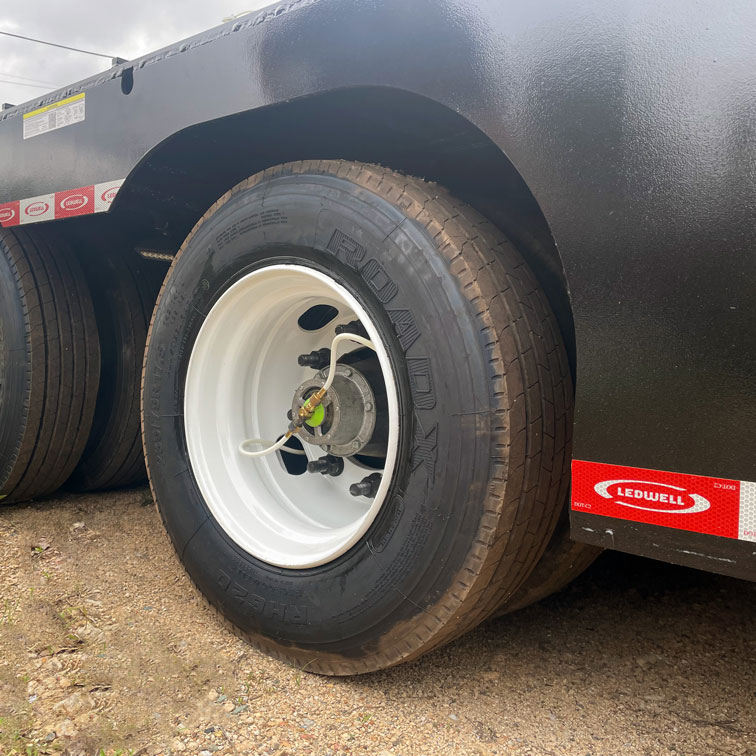
trailer equipped with tire inflation system

Result: Less than 30 minutes of downtime instead of hours roadside.

Justin Holmes is a District Sales Manager with 18 years of experience. His perspective on the tire inflation system stems from his time as an Area General Manager, during which he was directly responsible for fleet uptime and daily operations. Over the years, Justin has seen firsthand how the right trailer specs can make a real difference in productivity, reliability, and overall cost of ownership.

A trailer tire inflation system can be the difference between hours of roadside downtime and staying on schedule.


The Cost of Trailer Tire Downtime

Unplanned tire failures are one of the most common causes of trailer downtime. A single damaged tire can shut down a unit for hours, disrupt deliveries, and rack up service costs. For rental fleets operating on tight schedules, those delays add up fast.

Justin has spent nearly two decades managing and supporting fleet operations. His team depends on trailers that are ready to work every morning and capable of handling real job site conditions without constant surprises.


How a Trailer Tire Inflation System Prevented a Shutdown

While exiting a job site, a driver clipped the right rear wheel of a trailer on a newly installed curb. The outside tire suffered a significant cut to the exterior sidewall. Almost immediately, the trailer’s tire inflation system indicator light came on.

The driver safely pulled over to inspect the damage and heard a hissing sound from the tire. In the past, an issue like this would have meant parking the trailer on the roadside and waiting hours for a service truck.

After assessing the situation, the driver determined the trailer could be moved a short distance back to the branch for repair. Despite the visible damage and air loss, the installed tire inflation system continued supplying enough pressure to help the tire maintain its shape. 

Dispatch contacted the tire shop located next door to the branch while the driver was en route. Once back, the driver unloaded, pulled next door, and had the tire repaired immediately.

Total operational impact: Less than 30 minutes.

Without the inflation system, the outcome would have been very different. The driver would have remained parked roadside while dispatch arranged service. Even in a best‑case scenario, downtime would have been around two hours. More commonly, Justin’s team sees three to four hours of lost productivity for a single tire event.

Beyond lost time, roadside service calls cost much more than bringing equipment directly to a shop. For this one incident alone, Justin estimates savings of $400 to $500.


Operational and Cost Benefits for Fleet Managers

Reduced Downtime and Faster Repairs

Since installing the tire inflation system, Justin has seen improvements beyond emergency situations. Fewer morning surprises from flat or underinflated tires have helped keep equipment ready to work when the day begins.

Improved Tire Life and Daily Reliability

Justin has also noticed more even tire wear compared to trailers without the system. Driver confidence has increased, especially when it comes to interior tires that are harder to visually inspect. Immediate notification when an issue occurs allows teams to address problems before damage escalates.

The indicator light has become one of the most valued features, alerting drivers the moment there is a problem rather than discovering it hours later.


Return on Investment Over the Life of a Trailer

While Justin stops short of assigning an exact dollar figure to total savings, the math extends beyond emergency breakdowns alone. Over the life of a trailer, it would take only about six incidents like this to cover the cost of the system. However, even without frequent roadside events, the system continues to deliver value through more consistent tire pressure, more even tire wear, and fewer premature replacements. Those everyday savings add up quietly over time, reducing tire spend across the fleet while improving reliability. Everything beyond those initial scenarios becomes pure cost savings.


Built for Safety and Long-Term Reliability

Justin has long trusted Ledwell trailers for their durability and support, but he believes the tire inflation system has become the single most influential differentiator in trailer specifications.

“I would not consider purchasing another trailer without it being installed,” he says.

From safety and uptime to long‑term cost control, the system has proven itself where it matters most, on the road and on the job site.

Although the system has not been in service long enough for full lifecycle data, Justin anticipates a 15-25% improvement in tire life compared to trailers without inflation systems. Even without those final numbers, the early results have already justified the decision.

From productivity and customer experience to cost savings and fleet reliability, he believes tire inflation systems should be a standard specification, not an upgrade.

For operations that cannot afford downtime, this system helps keep trailers working, drivers moving, and schedules intact, exactly what Ledwell equipment is built to do.

trailer equipped with tire inflation system

Decades of Grit: Ledwell Through the Years

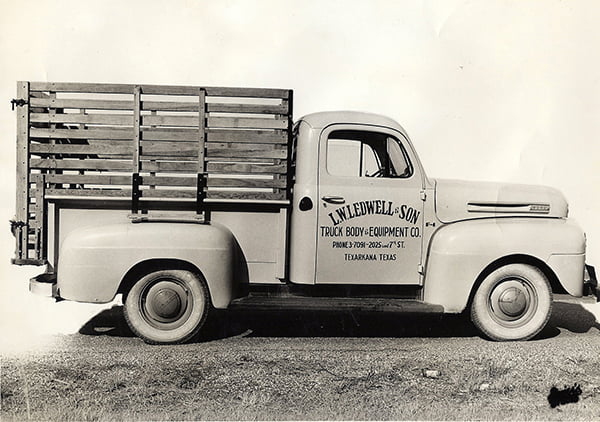
The Ledwell company history is a story built on hard work and a commitment to doing things the right way. What began in 1946 with Buddy Ledwell hauling lumber in Texarkana, Texas, has grown into a family-owned American manufacturer trusted across industries for tough, dependable trucks and trailers. Through every decade, Ledwell has answered real world challenges with equipment built to last, swift support when it matters most, and innovation grounded in experience. This timeline traces the milestones that shaped Ledwell into what it is today, and continues to move the world forward.

Ledwell and Son original manufactured truck body
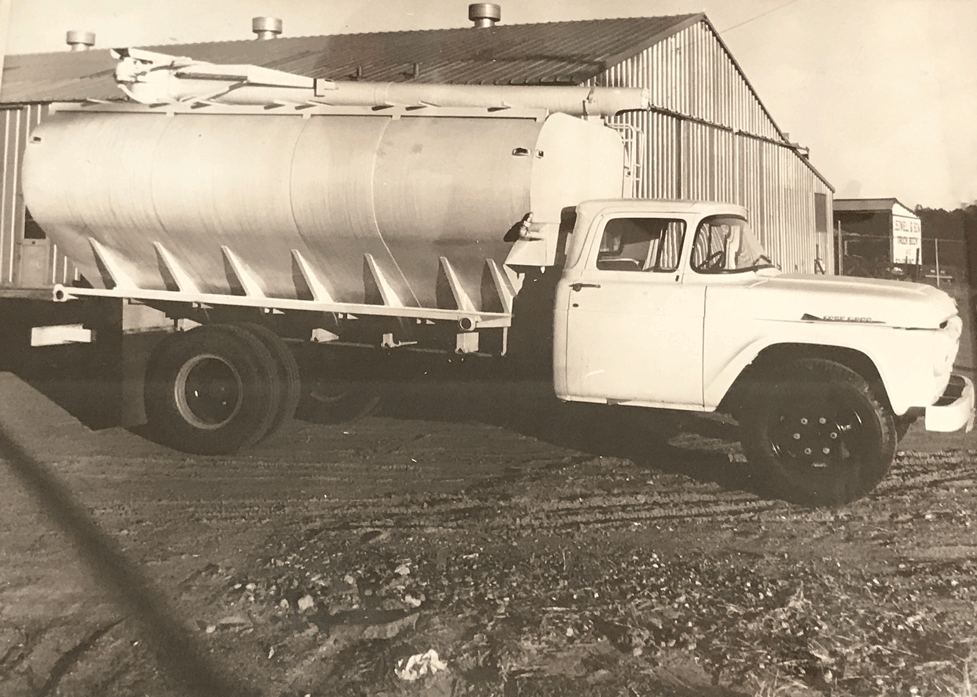
Early Ledwell Feed Truck

1940’s

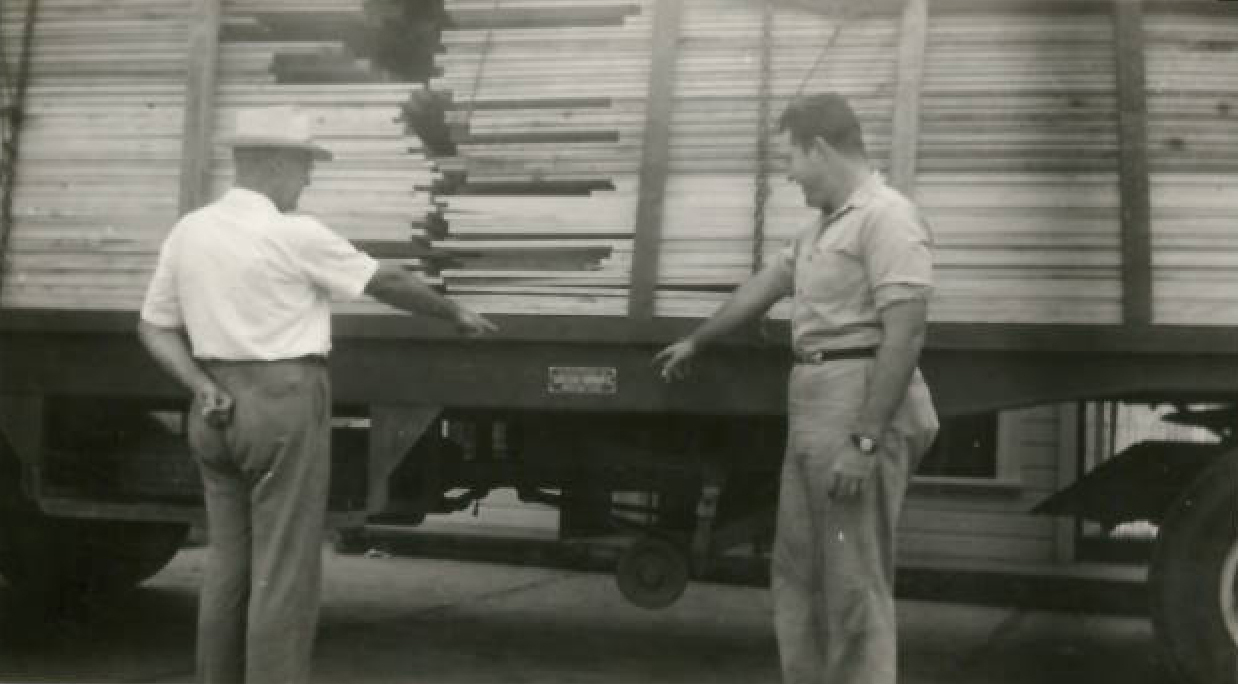
1946 Buddy Ledwell and his father started hauling lumber in Texarkana, Texas.


1950’s

1950 Ledwell shifted from hauling to building pick-up racks.
1955Ledwell began manufacturing dump trucks.
Moved to the Waco Street shop.
1957 First Feed Body sold & delivered 100 miles away—Ledwell started expanding reach.


1960’s

1963 Became a Bobcat Dealer.

Bobcat dealer since 1963
satellite project by Ledwell
Buddy Ledwell as Mr. McCluskey in Bootleggers movie

1970’s

1971 Built Satellite Antenna and shipped to South America in sections.
1972–1976 Ledwell Film Distribution helped release:
Legend of Boggy Creek (1972)
Bootleggers (1974)
Winter Hawk (1975)
1976 HydraTail Trailer was introduced.
1977 First Water Trucks were built.


1980’s

1980Invested in CNC Machine
First step in automating parts production.


1990’s

1990 Machine Shop was modernized, and production capacity expanded.
1999 Products began shipping internationally.

Ledwell enters international shipping in the 1980s
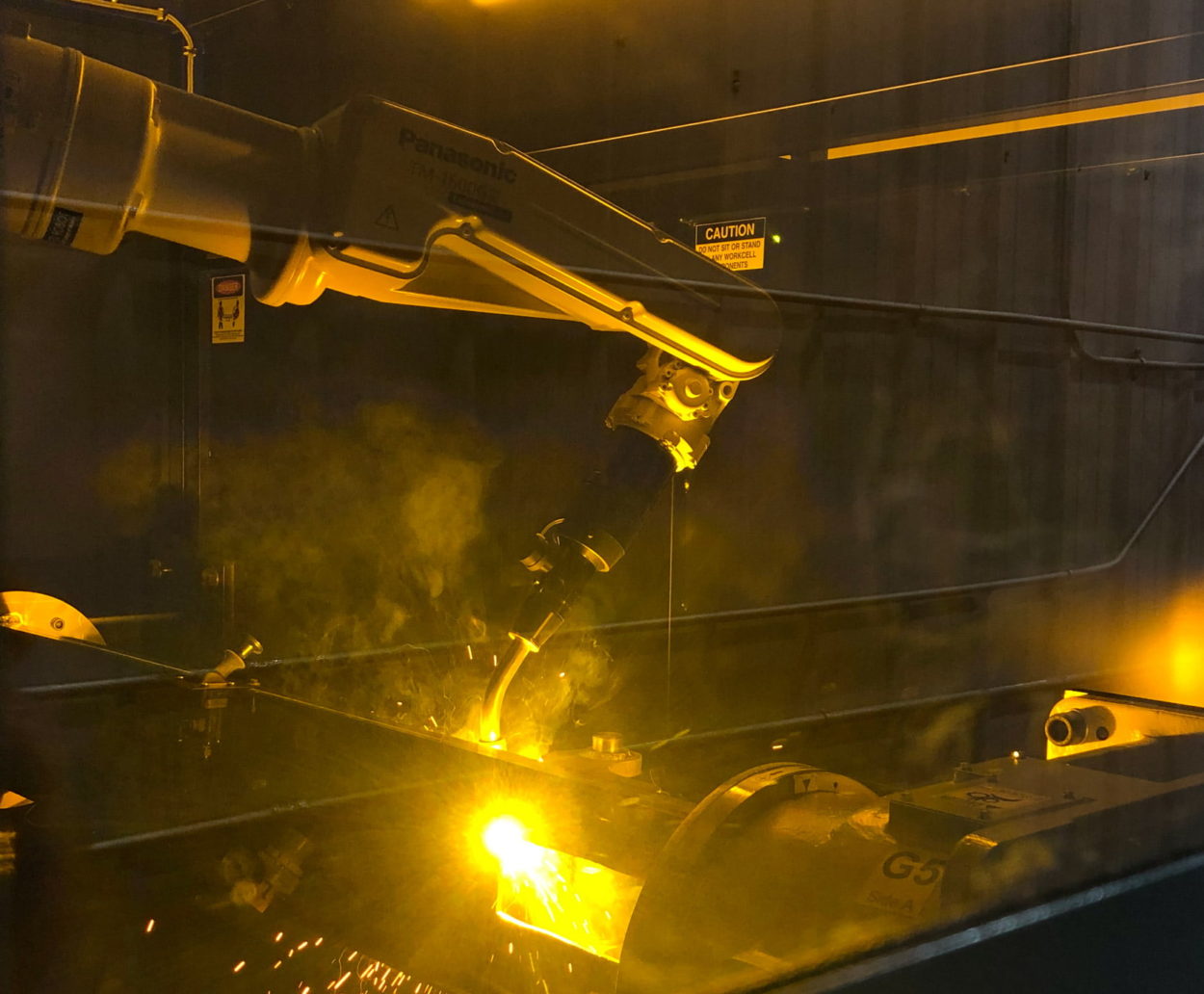
CNC Robotic Welder

2000’s

2008 North Carolina Office opened.
2009 Ledwell Machinery opens, offering Bobcat, Toro and Argo equipment.
Partnered with First Response Team of America.


2010’s

2010 Entered Vacuum Truck industry.
2012 Ledwell Office opened.
2013 First Truck Mounted Attenuator was built.
2016 First Gull Wing was manufactured.
2017 Added Powder Coating facility.
First Robot Welder was installed.
2019 Built first HydraTilt Truck.


2020’s

2020 MaxTilt Trailer was released.
Solar Lift Loading Ramp won Innovation Award.
2022 Patent was received for Gull Wing, HydraTilt Truck & MaxTilt Trailer.
2023 Manufacturing expanded by 63,000 sq. ft.
2025 Opened Ledwell Advanced Imaging.

Ledwell to Showcase Historic World Trade Center Beam at CONEXPO 2026

Tunnel to Towers Foundation to feature World Trade Center Beam in Ledwell's booth at Conexpo 2026

Ledwell and the Tunnel to Towers Foundation will bring a powerful piece of American history to CONEXPO this year, displaying an authentic beam recovered from the World Trade Center. The beam will be featured in Ledwell’s booth S62747 in the South Hall, Level 1, where attendees can learn about Tunnel to Towers, their mission, and the nationwide journey ahead. This rare World Trade Center beam exhibit offers families a meaningful opportunity to connect with American history.

The beam will travel across the country from May through September as part of the Foundation’s Steel Across America campaign, a moving tribute to the lives lost on September 11, 2001, and the heroes who stepped forward in the aftermath. At every stop, Tunnel to Towers will share its mission of supporting Gold Star and fallen first responder families, catastrophically injured heroes, homeless veterans, and helping America keep its vow to Never Forget 9/11.

Ledwell is honored to support this effort by building a patented Gull Wing Truck to transport the beam throughout its tour.

Visitors to CONEXPO are encouraged to stop by Ledwell’s booth to view the beam, meet Foundation representatives, and learn more about Tunnel to Towers and the work they do across the nation.

Celebrating 80 Years of American Manufacturing

buddy ledwell with lumber

Ledwell is celebrating 80 years of building tough, dependable equipment for the industries that keep America moving. From equipment rental and transportation to agriculture and feed delivery, Ledwell has become a trusted name across sectors that rely on hardworking machines built to last.

What began in 1946 as a small operation building livestock racks has grown into one of the country’s leading custom truck body and trailer manufacturers. Still family-owned and based in Texarkana, Texas, Ledwell continues to engineer American-made solutions for customers nationwide.

buddy ledwell with lumber
Ledwell Pick Up Cattle Rack
Ledwell Sales Team at IPPE in 1971

Custom Equipment for the Jobs That Matter

With a strong presence in rental fleets, farm operations, hauling, and service applications, Ledwell equipment is known for unmatched durability and smart engineering.

Whether it’s a Dump Truck clearing storm debris, a Feed Trailer delivering nutrients across rural America, a Vacuum Truck supporting critical infrastructure, or a Water Truck delivering life-saving water to extinguish brush fires, Ledwell builds equipment that holds up under pressure.

At the core of it all is the Ledwell Made Guarantee; our promise to deliver quality equipment, fast lead times, and long-term value, backed by responsive service and support.

University of Arkansas Feed Body with Ledwell Sales and Parts team members
Ledwell Parts Counter - history

Rooted in Values. Driven by Purpose.

Ledwell’s success is built on values that run deep. Quality is never negotiable. Grit is part of our DNA. We don’t back down from tough jobs or unique challenges.

Our legacy is something we take seriously. This company was built with hard work and determination. Above all, we treat people like family. We do what’s right, we look out for each other, and we take pride in what we build together. These values support our mission: manufacturing tough, innovative equipment that moves you forward.

Bobcat loading Ledwell Dump Truck with material
Ledwell rollback helping deliver equipment to Hurricane Helene clean up in North Carolina
Ledwell Water Truck watering lawn at Arlington National Cemetery

Built in America. Backed by Experience.

Ledwell fabricates over 85% of parts in-house and offers some of the shortest lead times in the industry. Every product is manufactured in Texas using American steel and backed by teams who know the equipment inside and out. As we look to the future, we remain committed to innovation, customer service, and the belief that American manufacturing still builds the best.

From one small shop to two full facilities in Texas and North Carolina, now spread across 91 acres that support operations throughout the United States, Ledwell’s journey proves what it means to get the job done right.

This year, we celebrate 80 years of hard work and progress, with our sights set firmly on a century of American manufacturing.

Ledwell Feed Trailer watching sunrise
Ledwell new manufacturing space

Comparing the Best: Rollback Trucks vs. HydraTail Trucks

Find the right heavy haul truck. Rollback or HydraTail Truck

Trying to decide on the best hydraulic dovetail truck?

There’s a reason that Rollback Trucks and HydraTail Trucks are trusted across job sites. These trucks are built to handle a wide range of hauling needs. When you’re looking for the right hydraulic dovetail truck, there are a few things to keep in mind.

Start with your needs. Do you need more clearance or stronger bed support? Do you need extra flexibility in how you load? Make a list of what matters most and go over it with your manufacturer before you buy.

Rollback and HydraTail Trucks both haul multiple pieces of equipment with ease. Both come equipped with a heavy-duty 20,000-pound planetary winch and full wireless controls. They provide a stable, flat surface for hauling and each one is built to take on tough jobs. But depending on your work, one may fit better than the other.

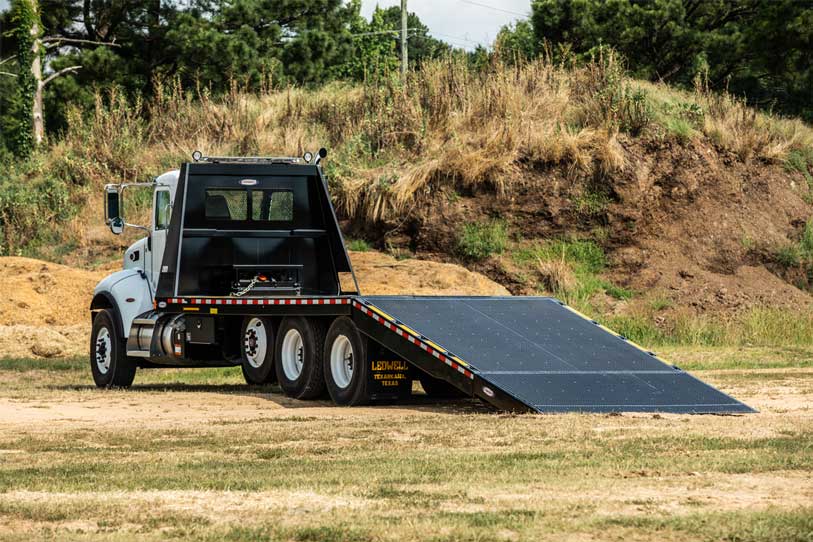
HydraTail Truck made by Ledwell for heavy haul transport

Height

The HydraTail bed sits about five and a half inches lower than a standard Rollback. That extra room can make a big difference when hauling tall equipment or when you need to stay under clearance limits, like underpasses or bridges. For many construction and equipment rental companies, that height difference matters.

Operation

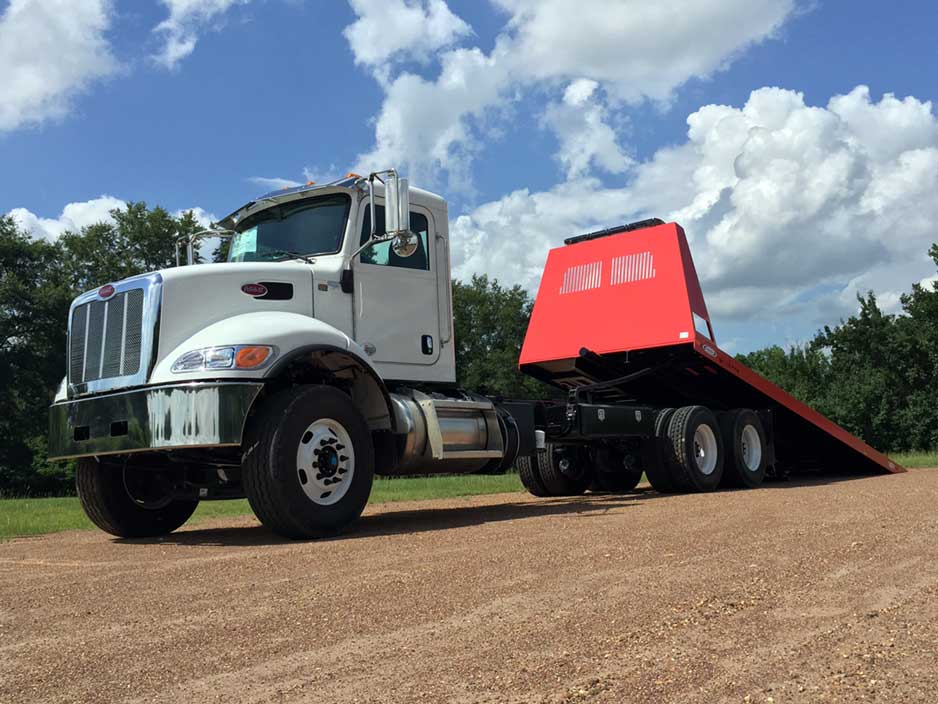
A HydraTail uses a folding tail to load moveable equipment onto the bed. You can winch it up easily. The Rollback, on the other hand, tilts the entire bed, which gives you a great load angle. That means you can guide equipment into position smoothly using the winch. Both styles work well—just depends on the type of equipment and job site you’re working with.

heavy duty rollback truck by ledwell - Machinery Moving Bed Truck for sale

Footprint

Where you load and unload matters too. A Rollback bed slides back, so you’ll need extra space behind the truck. The HydraTail lifts instead, which means it takes up less room on the ground. That makes a difference in tighter areas, like busy city streets or cramped yards.

Still unsure which one is right for you? Reach out to our sales team. We’ll learn about your job and help you pick the right truck to get it done.